
training
days
moduls in
Vienna
ABOUT
A more sustainable and safe handling of chemicals
is a clear trend in chemicals' policy.

The flagship of this trend is “Green Chemistry”, a concept that over a long period was a more academic approach. This is changing and companies are discovering Green Chemistry as a business model. Also during the years past, numerous countries across the globe adopted a more stringent chemicals' legislation, aiming to substitute or better manage the most problematic chemicals.
In particular, the EU´s Green Deal opened a window of opportunity to further boost this approach to a highly improved chemicals management. The Chemicals Strategy for Sustainability has recognised Green Chemistry as an important milestone to a cleaner and more sustainable future. Just like the European Chemicals Industry Action Plan from 2025 considers Green Chemistry as a fundamental building block for innovation in chemicals production. And finally, the Austrian government has recognised Green Chemistry as an important milestone to a cleaner and more sustainable future.
Therefore, industry needed to start introducing more sophisticated chemicals-management-schemes. This transition process is ongoing and in particular, smaller companies are challenged heavily. However, also large companies and institutions are facing significant challenges.
One of the most pressing challenges is the availability of qualified people, who are able to understand and keep track of the fast-changing regulatory environment for chemicals. Applying Green Chemistry fundamentally changes the way one manufactures and uses chemicals. Foresight, a full understanding of supply chains and the complexity of chemicals` impacts are crucial. In this context the GCCM training will also address the highly pressing social challenge of gender equality by proactively approaching women to join as participants and lecturers. This should be a valuable contribution to the professional development and positioning of women in relatively masculine domains.
Right now, typical chemicals' management focuses on how to handle available chemicals, e.g. by implementing requirements from safety-data-sheets or worker-protection-legislation. The cooperation among different divisions – like marketing, product-stewardship, purchase, R&D etc. – is often highly rudimental. In such an organisational environment, a Green Chemistry approach cannot develop to its full potential.
The transition to a green and sustainable chemicals'-use and the full exploitation of its opportunities requires that all relevant organisational units work together, and the company management is involved. A common strategy and cross-linked cooperation is necessary. Such cooperation needs efficient steering and this would be the role of the GCCM (“Green Chemistry Change Manager”).
Any queries? Send an email to: office@green-chemistry.academy
Course 2026
starts in
days
hours
minutes
seconds
HOLIDAY INN VIENNA CITY

Why you should attend ?

In a company the GCCM should:
• actively steer the transformation process
• track relevant future trends and developments
• contribute to a sustainability strategy
• recognise and understand relevant interactions of technical, political, legal and international nature
• be a company´s advocate for “Green Chemistry”

The GCCM-training will therefore focus on facilitating:
• the ability to think cross-linked and act accordingly
• the knowledge to develop a modern and efficient chemicals management
• the knowledge about innovative and sustainable approaches including their practical application
• gender equality in chemicals management

Structure and design & who should attend?
• Optimised content based on 2 successfully performed courses
• lots of hands-on-activities (e.g. examples, discussion)
• participants should implement their acquired knowledge immediately in practice
the target group aims at business support experts/providers, e.g. from:
• businesses /sme companies
• consultants / multipliers
• public service / academia
Course
10 Training Days. 2 Modules. 1 City.
Training language: ENGLISHModule 1
regulation/green chemistry
Vienna
Location: HOLIDAY INN VIENNA CITY
This module provides an overview about the global regulatory situation, its main actors and the connex to Green Chemistry. The main objective is to make the GCCM understand:
• introduction to change management and to the training,
• introduction to the concept and definition(s) of “Green Chemistry”,
• the 12 principles of Green Chemistry and their primary chemical target areas,
• the legal requirements to stay in or enter a specific market,
• the political focus of different regions,
• potential synergies between different regions,
• the identification of hazards, risks and exposure related to chemicals and in the light of Green Chemistry,
• the importance of gender and vulnerable groups in chemicals management,
• an early identification of problematic substances,
• potential opportunities and,
• important sources of information.
Module 2
implementation/innovation
Vienna
Location: HOLIDAY INN VIENNA CITY
This module shall give the GCCM the necessary background to better understand legal, political and practical aspects related to:
• the relevance of environmental footprints and the concept of “Safe and Sustainable by Design (SSbD)” in the light of Green Chemistry,
• the implementation of new business models and circular economy aspects of Green Chemistry as a competitive advantage,
• the availability and application of new approaches to non-animal tests for chemicals,
• the optimisation of the cooperation/communication in the supply chain,
• a systematic approach for an efficient substitution,
• the development and implementation of chemical and non-chemical substitution of problematic substances,
• communication needs inside a company, within the supply chains and to other actors,
• elements of steering the transformation process,
• defining, designing and implementing a “Green Chemical”-approach,
• handling the change process and/or managing the relevant steps of a project,
• planning and implementing efficient market-access strategies,
• available tools and databases,
• integrating sustainability/substitution into the R&D-process,
• future trends and developments.
Including voluntary completion test and certificate.



TICKETS
Course Tickets 2026

Note:
Hotel booking, hotel expenses, as well as travel expenses, etc. have to be taken care of by the delegates themselves.
Module 1-2 - HOLIDAY INN VIENNA CITY, Margaretenstraße 53, 1050 Vienna, Austria - go to WEBSITE
EVENT CITIES
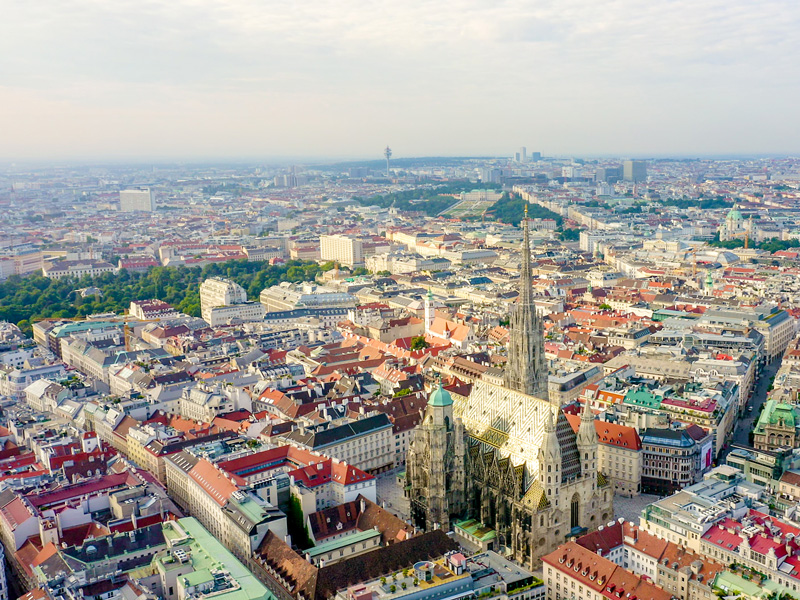
“Green Chemistry Change Manager” –
Course
(10 Training Days – 2 Modules):
HOLIDAY INN VIENNA CITY
Margaretenstraße 53, 1050 Vienna, Austria
ORGANIZER
Feierl-Herzele GmbH
Herbert Rauch Gasse 17
2361 Laxenburg
Austria
office@green-chemistry.academy
https://green-chemistry.academy